Tier 1 Reefing Inc
Cerith Snail (Cerithium sp.)
Cerith Snail (Cerithium sp.)
Couldn't load pickup availability
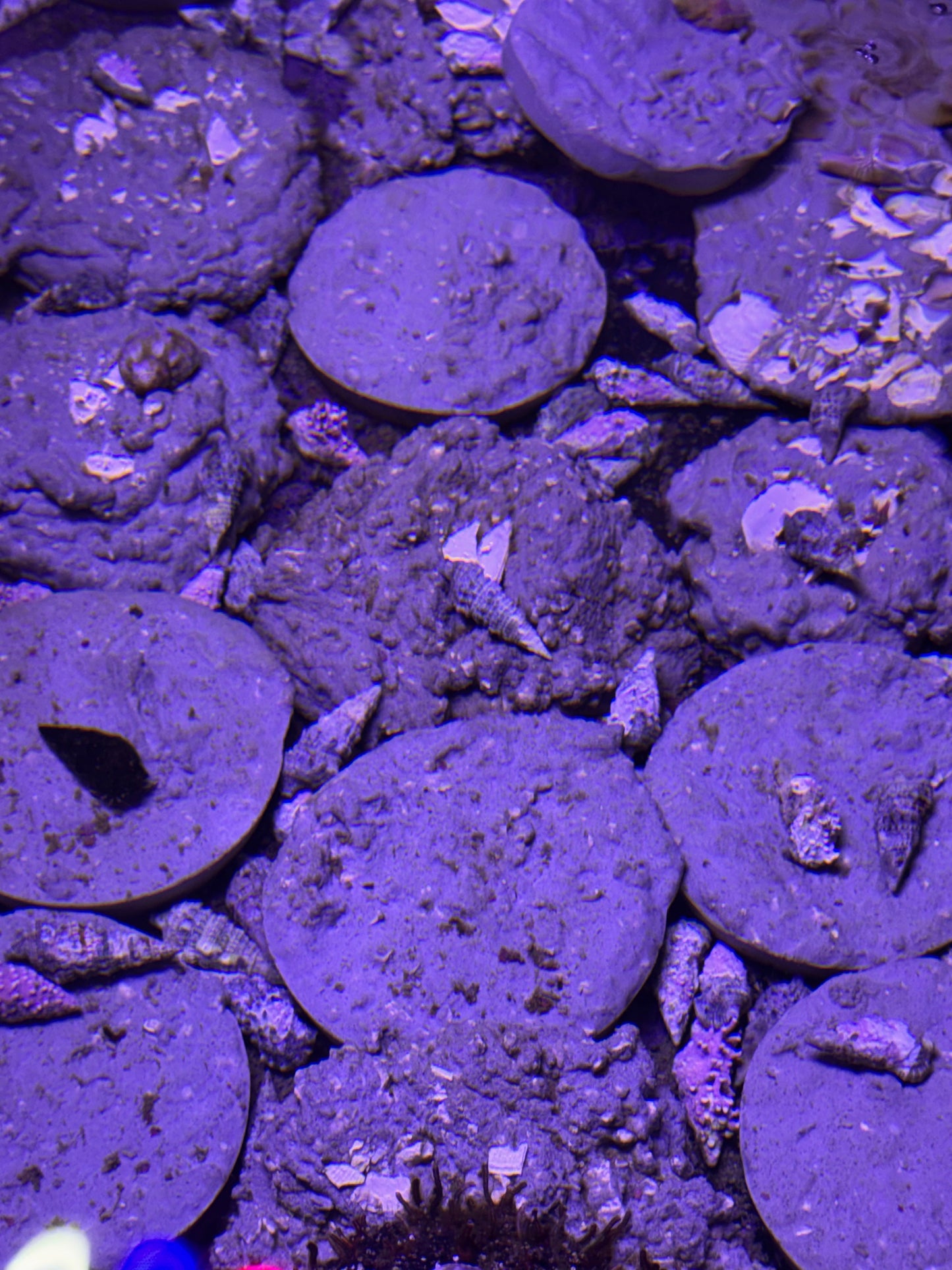
Cerith snails are one of those quiet, indispensable members of a thriving reef tank—rarely the center of attention, yet constantly at work keeping the ecosystem balanced. Belonging to the genus Cerith snail, these small, spiral-shelled grazers are prized by aquarists for their versatility and gentle impact on the aquarium environment.
By day, Cerith snails often tuck themselves into the sandbed or rest among the rockwork, but as the lights dim, they emerge as part of the reef’s natural cleanup crew. They glide across surfaces with surprising efficiency, feeding on film algae, diatoms, cyanobacteria, and leftover detritus. Unlike some larger or more aggressive invertebrates, Ceriths are completely reef-safe—they won’t harm corals, disturb fish, or bulldoze delicate aquascaping. Instead, they quietly polish glass, sift through substrate, and help prevent nuisance algae from taking hold.
Their behavior also benefits the health of your tank in less obvious ways. As they burrow through the sand, Cerith snails gently aerate the substrate, reducing the buildup of trapped waste and discouraging anaerobic pockets. This natural stirring action supports a more stable and oxygen-rich environment, especially in reef systems with deeper sand beds.
Care Instructions:
Caring for Cerith snails is refreshingly straightforward, making them an excellent choice for both beginner and experienced aquarists. They thrive in stable saltwater conditions typical of reef tanks: temperatures between 72–78°F, salinity around 1.023–1.026, and consistent pH and alkalinity levels. Like all invertebrates, they are sensitive to sudden changes, so slow acclimation—preferably via drip method—is essential when introducing them to a new system.
While Cerith snails are efficient grazers, a well-established tank with natural algae growth will provide most of their nutritional needs. In newer or ultra-clean systems, supplemental feeding may be necessary. Occasional offerings of algae wafers or finely chopped marine foods can ensure they remain healthy and active.
Compatibility is rarely an issue, though care should be taken to avoid housing them with aggressive predators such as certain wrasses, puffers, or hermit crabs that may view them as food or competition for shells. Given the right conditions, Cerith snails may even reproduce in captivity, releasing tiny larvae that become part of the tank’s microfauna.
In many ways, Cerith snails embody the philosophy of a successful reef aquarium: balance, subtlety, and cooperation. They work tirelessly behind the scenes, helping to maintain the beauty and stability of your marine environment—one small glide at a time.
Share