Tier 1 Reefing Inc
Chestnut Snails (castanea)
Chestnut Snails (castanea)
Couldn't load pickup availability
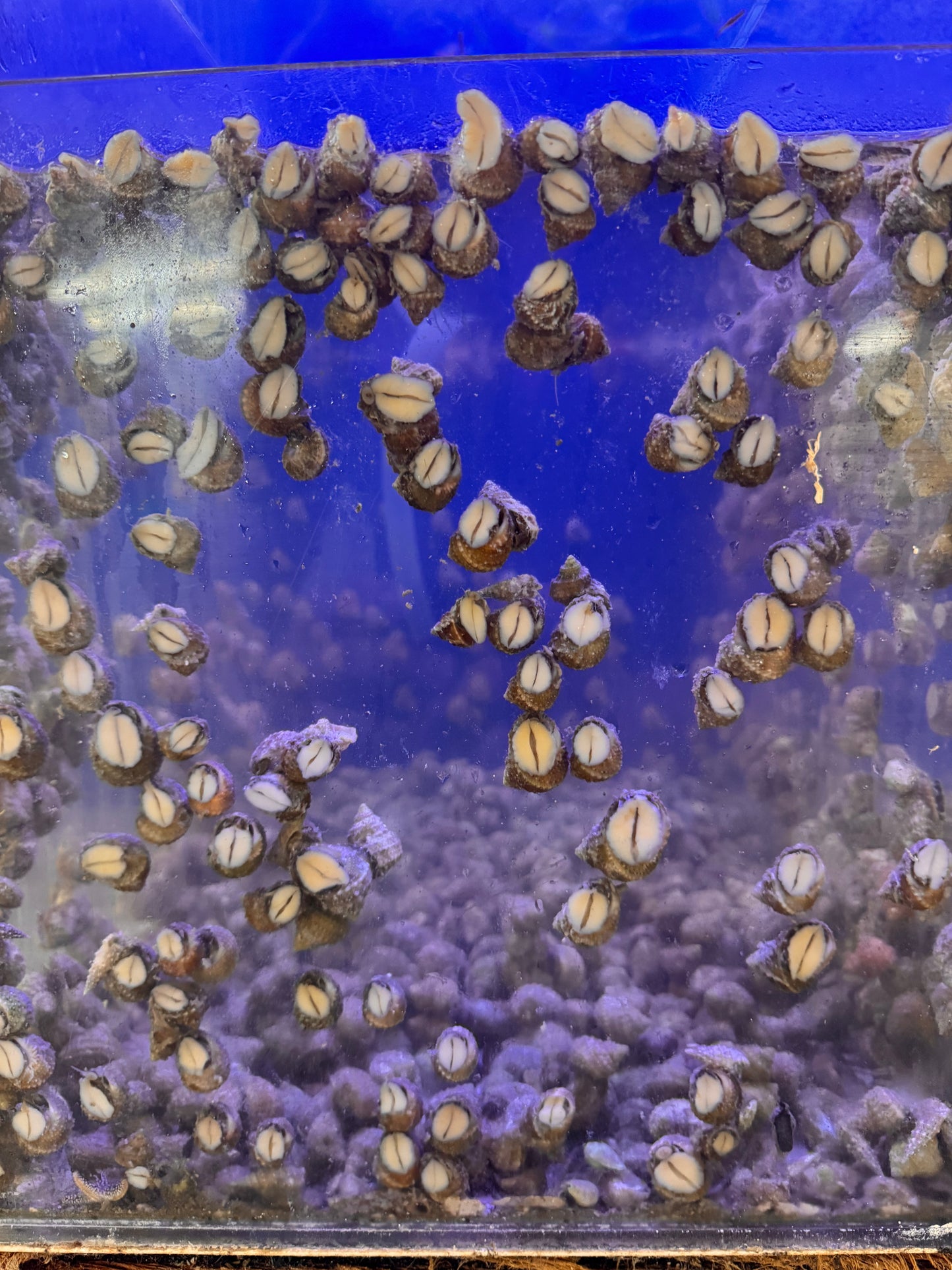
Chestnut Turbo snails are a popular and practical addition to marine aquariums, valued for both their striking appearance and their role as efficient algae cleaners. Recognizable by their rounded, spiral shells with warm brown and chestnut tones, these snails bring a natural, earthy aesthetic to saltwater tanks while helping maintain a healthy ecosystem.
Overview
Chestnut Turbo snails are hardy invertebrates known for their constant grazing behavior. They feed primarily on algae, including film algae and some hair algae, making them excellent members of a clean-up crew. Their active nature means they are often seen moving across glass, rocks, and substrate surfaces throughout the day and night.
Care Instructions:
Tank Requirements:
- Minimum tank size: 10 gallons
- Suitable for reef and fish-only systems
- Provide plenty of live rock for grazing and hiding
Water Parameters:
- Temperature: 72–78°F (22–26°C)
- Salinity: 1.023–1.025 specific gravity
- pH: 8.1–8.4
- Stable calcium and alkalinity levels are important for shell health
Diet:
- Primarily algae (natural tank growth)
- Supplement with dried seaweed or algae wafers if natural food is limited
Behavior & Compatibility:
- Peaceful and reef-safe
- Safe with corals and most tank mates
- Avoid housing with aggressive or predatory species that may harm snails
Maintenance Tips:
- Acclimate slowly to prevent shock (drip acclimation recommended)
- Ensure stable water conditions, as snails are sensitive to sudden changes
- Provide occasional supplemental feeding in very clean tanks
Why Choose Chestnut Turbo Snails?
These snails are an excellent choice for both beginner and experienced aquarists. Not only do they help control algae naturally, but they also contribute to the overall balance and cleanliness of your aquarium without disrupting other inhabitants.
Adding Chestnut Turbo snails to your tank is a simple, effective way to enhance both the beauty and health of your marine environment.
***UPS Ground for Florida orders only due to perishable good.***
Share